Custom Dental Sleep Appliances
Sleep Apnea Treatment in La Jolla, CA
If CPAP is difficult to use, a custom mandibular advancement appliance may be an option. Explore physician-guided oral appliance therapy with dental care close to home in La Jolla and the San Diego area.
A Custom Option for Obstructive Sleep Apnea
Obstructive sleep apnea (OSA) occurs when the upper airway repeatedly narrows or closes during sleep. For adults whose medical provider recommends oral appliance therapy, a custom mandibular advancement device can hold the lower jaw slightly forward to help maintain an open airway. It is worn during sleep and adjusted to balance effectiveness with comfort.
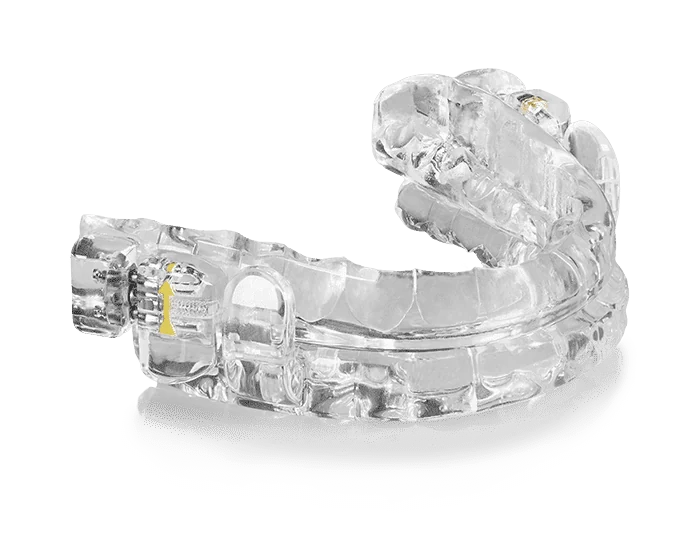
Many people first consider a dental sleep appliance after struggling with a CPAP mask or machine. An appliance is an option for some patients, but it is not right for everyone. Diagnosis and treatment selection belong with a qualified medical provider; dental care focuses on appliance suitability, fit, adjustment, and monitoring.
At Elite Smiles of La Jolla, patients from La Jolla and nearby San Diego communities can request a dental consultation to discuss this option. If you have not been diagnosed, start with your physician or sleep specialist for the appropriate sleep evaluation.
Symptoms That Deserve a Medical Evaluation
Symptoms during sleep
- Loud, frequent snoring
- Breathing pauses noticed by a sleep partner
- Gasping, choking, or snorting awake
- Restless sleep or repeated awakenings
Symptoms after waking
- Daytime sleepiness or fatigue
- Morning headaches or dry mouth
- Trouble concentrating
- Feeling unrefreshed after a full night in bed
Snoring alone does not prove sleep apnea. A medical evaluation and sleep testing, when indicated, are needed to establish the diagnosis.
How a Mandibular Advancement Appliance Works
A custom oral appliance fits over the teeth and gently positions the lower jaw forward while you sleep. This positioning may reduce airway collapse in selected adults with OSA. A custom, adjustable design allows the position to be changed gradually as your comfort and response are assessed.
It is different from a grinding night guard, which protects teeth from clenching forces and is not a treatment for sleep apnea. An oral appliance also needs more than a comfortable fit: your medical provider may recommend follow-up sleep testing to verify that it is working.
Possible effects include temporary jaw soreness, tooth discomfort, excess saliva or dry mouth, and changes in the bite over time. Regular dental checks help identify and manage these issues.
Oral Appliance Therapy vs CPAP
Both approaches are prescribed in medical care. Your sleep clinician can explain which fits your diagnosis and goals.
| Consideration | Custom Oral Appliance | CPAP |
|---|---|---|
| How it works | Holds the lower jaw forward to help keep the airway open. | Delivers pressurized air through a mask to keep the airway open. |
| Who may consider it | Some adults whose clinician recommends it, including people who struggle with CPAP. | A common treatment for OSA across severity levels, based on medical assessment. |
| Equipment | Custom device worn in the mouth during sleep. | Machine, tubing, and a mask worn during sleep. |
| Follow-up | Dental fit and bite checks, plus medical assessment of treatment effectiveness. | Medical review of use, fit, settings, and treatment response. |
CPAP may be the better option for some patients. If it has been prescribed to you, speak with your medical provider before stopping or changing it.
Who May Be a Candidate?
It may be worth discussing if...
- You are an adult with a medical diagnosis of OSA.
- Your medical provider recommends or is considering oral appliance therapy.
- You find CPAP difficult to tolerate or prefer to discuss an alternative.
- Your teeth, gums, and jaw can support a custom appliance.
Another plan may be needed if...
- Your medical provider recommends a different treatment.
- Dental or jaw conditions limit a secure or comfortable fit.
- The appliance does not adequately control breathing events on follow-up testing.
- You need additional evaluation before a treatment decision.
Severity, medical history, dental health, and personal preference all matter. No single appliance or treatment is appropriate for every patient.
From Consultation to Follow-Up
Exact steps depend on your medical recommendation and dental findings.
- Medical Diagnosis: a qualified medical provider reviews symptoms and testing, diagnoses OSA, and recommends appropriate treatment options.
- Dental Consultation: review your history, teeth, gums, bite, and jaw comfort to determine whether a custom appliance is dentally suitable.
- Scan and Bite Records: if an appliance is appropriate, a digital scan or impressions and bite records capture the information needed for a custom fit.
- Fabrication: the records are used to make an adjustable appliance tailored to your mouth. Device type and timing depend on the clinical plan.
- Fitting and Adjustment: check the appliance for fit and comfort, then adjust its jaw position gradually as directed.
- Ongoing Follow-Up: dental visits monitor comfort, jaw symptoms, and bite changes. Your medical provider assesses effectiveness and may arrange repeat sleep testing.
Sleep Apnea Treatment FAQs
Explore a Custom Sleep Appliance
Request a dental consultation in La Jolla or Chula Vista. Bring your sleep study and medical treatment recommendation if you have them; if you are undiagnosed, start with your physician or sleep specialist.